
-
-
Karroubi ad
Making fun his campaign promises
[ame]http://www.youtube.com/watch?v=rDxsTRYhLsM[/ame]Comment
-
با پایان ثبت نام نامزدهای داوطلب انتخابات ریاست جمهوری، فضای انتخابات وارد مرحله تازه ای شده است. نامزدها با سفر به شهرهای مختلف به تبیین نظرات و برنامه های انتخاباتی خود مشغول شده اند و احزاب، گروهها و چهره های سیاسی نیز سرگرم بحث و گفتگو در باره نامزدهای مورد حمایت خود هستند.
زهرا رهنورد همسر میرحسین موسوی در همایش دو روزه "از آرمان جمهوری اسلامی تا جمهوری اسلامی آرمانی" در دانشگاه تهران از وضعیت سیاسی و اجتماعی موجود در ایران انتقاد کرد و گفت: "امر به معروف و نهی از منکر از آرمان های ما به شمار می آمد اما هیچگاه فکر نمی کردیم که روزی برای امر به معروف و نهی از منکر گشت امنیتی گذاشته شود بلکه توقع ما این بود که این امر گفتگو و دیالوگ بود."
خانم رهنورد که عضو هیات علمی دانشگاه است با اشاره به شعارهای اول انقلاب گفت:"در کوران انقلاب شعار می دادیم زندانی سیاسی آزاد باید گردد ولی هیچگاه فکر نمی کردیم روزی در جمهوری اسلامی باز هم چنین فریادی را سر دهیم."
خانم رهنورد که که پیش از این رئیس دانشگاه دخترانه الزهرا در تهران بوده است با اشاره به دوران پیش از انقلاب گفت: "همواره از خدا می خواستیم که آسمان پر ستاره ای را در اختیار مردم قرار دهد و هیچ گاه فکر نمی کردیم که روزی ستاره های آسمان در دامن دانشگاه بیفتد و دانشجویان ما به نوع دیگر ستاره دار شوند."
همزمان با این سخنان، میرحسین موسوی نیز که به استان مرکزی رفته در خمین زادگاه آیت الله خمینی بنیادگذار جمهوری اسلامی، در جمع گروهی از طرفدارانش سخن گفته است.
گزارشها حاکی است که در زمان سخنرانی این نامزد انتخابات ریاست جمهوری، صدای میکروفن قطع شده و آقای موسوی با بلندگوی دستی خطاب به طرفداران گفته است: "هر جا که برای سخنرانی می روم یا برق قطع می شود یا میکروفن ها از کار می افتد که من این اتفاق را به حساب مهرورزی می گذارم."
احمدی نژاد: توسعه نه؛ تعالی
محمود احمدی نژاد که نامزد انتخابات ریاست جمهوری است تاکنون در باره برنامه های انتخاباتی اش اظهار نظری نکرده اما هر روز به مناسبت هایی حاضر می شود.
آقای احمدی نژاد در روز یکشنبه در جمع دانش آموزان شرکت کننده در "هشتمین کنگره ملی فراخوان پرسش مهر" گفت:"امروز در دنیا به برنامه های سازندگی برنامه های توسعه می گویند اما ما واژه تعالی را انتخاب کردیم چرا که واژه توسعه یعنی گسترش، اگر چه مقوله خوبی است اما فاقد هر نوع بار ارزشی و انسانی است."
با آنکه آقای احمدی نژاد در باره انتخابات به صورت مستقیم حرفی نزده اما حسین سعیدی به عنوان مسئول "ستاد مردمی و خودجوش حامیان احمدی نژاد" از عملکرد وی دفاع کرده و گفته است:"ما در برابر آینده مملکت مان بی تفاوت نیستیم و آمده ایم در برابر موج حملات خارجی علیه ابرمرد خدمت و مهرورزی بایستیم و بتوانیم با افتخار این مرد شجاع را یاری کنیم."
به گفته آقای سعیدی، گروه وی آمده است تا "با یک یا حسین دیگر در 22 خرداد پیروزی این مرد دلاور را جشن بگیرد."
کروبی:وضعیت دانشگاهها وحشتناک است
مهدی کروبی دیگر نامزد انتخابات ریاست جمهوری که به ایلام سفر کرده در جمع دانشجویان شهر ایلام گفت: "وضعیت دانشگاهها این روزها وحشتناک است و هر روز عده ای دانشجو یا ستاره می گیرند یا تعلیق می خورند و یا دستگیر می شوند. اگر با حمایت و رای شما مردم رئیس جمهور شوم حتما در پی تغییر وضعیت موجود بر خواهم آمد و در دولت من دانشجوی ستاره دار معنا نخواهد داشت."
آقای کروبی با بیان این که با ذکر گفتن و ورد خواندن مشکل کشور حل نمی شود گفت: "مردم باید حضور محکم و گسترده در انتخابات داشته باشند. امروز عده ای در پی حضور کمرنگ مردم در صحنه انتخابات هستند ولی اگر مردم حضوری گسترده در انتخابات داشته باشند آنها تا ماه ها به کما خواهند رفت."
Comment
-
Campaigning has officially got under way in Iran's presidential elections, with just four people cleared to run out of the 475 who registered.
Iran's Guardian Council cleared four candidates, including Mahmoud Ahmadinejad, the current president, to run for election, Iran's Jumhuri-ye Eslami newspaper reported on Thursday.
The other candidates are: Mirhoussein Mousavi, a former prime minister; Mahdi Karoubi, a former parliament speaker; and Mohsen Rezaie, a former head of the Revolutionary Guard.
"As of now all of them can start campaigning up until 24 hours before election day," Sadeq Mahsouli, the interior minister, said.
Ahmadinejad economic policies have concerned some at home, while on the international stage he has earned notoriety for his comments on Israel and his refusal to concede to Western demands over Iran's nuclear programme.
Reformist opposition
Rezai, who says he is standing as an independent, has accused Ahmadinejad of pushing Iran to the edge of a "precipice", while Mousavi has vowed to change the "extremist" image Iran has earned abroad under its current president.
For his part, Karroubi, the most overtly reformist of the four, insists he will be careful while introducing changes not to antagonise the country's political conservatives.
But Ayatollah Ali Khamenei, Iran's supreme leader, appears to have come out in support of Ahmadinejad, urging voters not to elect a candidate who could adopt a pro-West stance.
It would be a "catastrophe" for Iran, Khamenei said, if a candidate who "thinks about endearing himself to some Western power or an international arrogant" is elected next month.
Official sanction
A total of 475 Iranians had registered as prospective candidates - 433 men and 42 women.
Mousavi was Iran's last prime minister,
before the post was abolished [EPA]
All were screened by the 12-member Guardian Council, made up of six clerics selected by Khamenei and six jurists proposed by the head of the judiciary.
In the 2005 election, won by Ahmadinejad, eight candidates of the 1,014 who registered were approved, and eventually just seven stood.
Karroubi blamed "irregularities" for his defeat in 2005 and has demanded transparency this time round.
"It is not possible to have any irregularities in this election. Even if there are some minor infringements, the system is developed in such a way as to confront these," Mahsouli said.
He said a lottery would now be held to determine the order of televised debates by candidates.
Media coverage
Ezatollah Zarghami, the head of Iran's state-run television, said last week that the channel would air debates by candidates and vowed "fairness" in its coverage.
But Mousavi, Ahmadinejad's main rival, has accused state television of "repeated and open breaches of neutrality".
His comments were made in a letter to Ali Larijani, the parliament speaker; Ayatollah Mahmoud Hashemi Shahroudi, the head of the judiciary; and Ghorban Ali Dorri Najafabadi, Iran's attorney-general.
Karroubi has also previously accused television of broadcasting biased coverage in favour of Ahmadinejad.Comment
-
To some, they are "election clowns."
They have no political background, no experience, and zero chance of being allowed to run in Iran's upcoming presidential election.
But every four years, they appear out of nowhere and register their candidacies for president. Overnight, their unusual appearances, bizarre promises, or both, gain them stardom before they are banned from running and once again disappear into obscurity.
Most of this year's 475 applicants from various walks of life -- including a truck driver, a dentist, an unemployed woman, and one 12-year-old -- will have been disqualified well before the ballots are cast on June 12.
The Guardians Council is due to release its final list of approved candidates this week. The list is likely to exclude the vast majority of candidates -- particularly eccentrics and many issue-based independents -- leaving voters a handful of "serious" candidates from which to choose.
It is a spectacle that is regarded with amusement by those who see it as a testament to openness of Iran's electoral system, and with suspicion by detractors who see it as a meaningless sideshow to a clerically dominated race among insiders.
Promises, Promises
Among this year's notable presidential wannabes is 28-year-old Shahram Mehrabi, whose tattooed nose, Bogart-esque hat, and string-bead necklace bearing a large Zoroastrian symbol set him apart from other potential candidates.
"My aim is to serve the people, 7,000 years of [history] must be revived," Mehrabi says. "We must have the first say in the world -- 7,000 years."
Another aspirant, Ali Akbar Nasiri, who wears a flowing white dress adorned with his name and political slogans as he carries a large Iranian flag, was also an immediate success.
"It's clear, I've come at the order of Imam [Ruhollah] Khomeini and Ayatollah [Ali] Khamenei and upon the order of God, His Prophet, and the first Imam," Nasiri says. "We obey their orders until eternity to save this country from [colonizing ] governments, so that you can stay alive."
Other unique entries include an 86-year-old man who unabashedly promises, if elected, to appoint his son as housing minister. A 12-year-old boy has outlined his plans to transfer Israel to Hawaii. Then there is the 75-year-old farmer who has pledged to build four hotels in every city in Iran, so people can stay there for free. Or the physician, who has claimed to have traveled to many countries -- including England, where he saw the Eiffel Tower.
'Making Statements'
All registered -- or at least attempted to register -- their candidacies last week in Tehran during the official five-day registration period.
Since then, Iranian state television has devoted a lot of airtime to the eccentric and bizarre characters, and their stories have been covered widely in the press, complete with colorful pictures.
But less than 1 percent of those who register as candidates will be approved by the Guardians Council, the 12-member body that is tasked with interpreting Iran's constitution and has the final say over who will actually be allowed to run for elected office.
The field will have been thoroughly vetted by the time ballots are cast on June 12.Detractors argue that the power of the clerically dominated Guardians Council to vet candidates is one of the main obstacles to free and fair elections in Iran.
The requirements for registering for Iran's elections are fairly straightforward. Potential candidates must be 18 or older; the Iranian Constitution says candidates must also be among the "religious and political personalities," hold Iranian citizenship, and believe in the principles of the Islamic Republic and the official religion of the country.
Nemat Ahmadi, a political analyst and lawyer in Tehran, says the lack of conditions for registration is one of the reasons for the abundance of "election clowns" in Iran.
He also says, however, that the high number of potential candidates does not mean they should be dismissed out of hand. Some register their candidacies in order to make valid political statements or to highlight societal problems such as unemployment, housing shortages, and the lack of freedoms.
"Honestly, this part of it is an expression of the pain and hopes of the people and the things the government hasn't done," Ahmadi says.
Passed Over
One potential candidate -- wearing a suit and tie, which is seen by many as a sign of dissent following the 1979 revolution and the establishment of the Islamic Republic -- says freedom of speech, expression, and dress will be among his priorities.
One woman arrived to register her candidacy while holding a book wrote about discrimination against women in Iran.
However, such real-issue candidates and other independent figures are unlikely to get the same level of exposure on state television as their more bizarre counterparts.
Ahmadi suggests to RFE/RL that the Guardians Council tolerates the eccentrics in order to justify the disqualification of the independent candidates and the dissenters.
"Our television mischievously shows the [eccentric] candidates but doesn't show the dissenting figure who could get a portion of the votes," Ahmadi says. "When in the past the parliament has passed a bill setting conditions for presidential candidates, the Guardian Council has rejected it."
Iranian media refer to just four candidates as "serious" contenders.
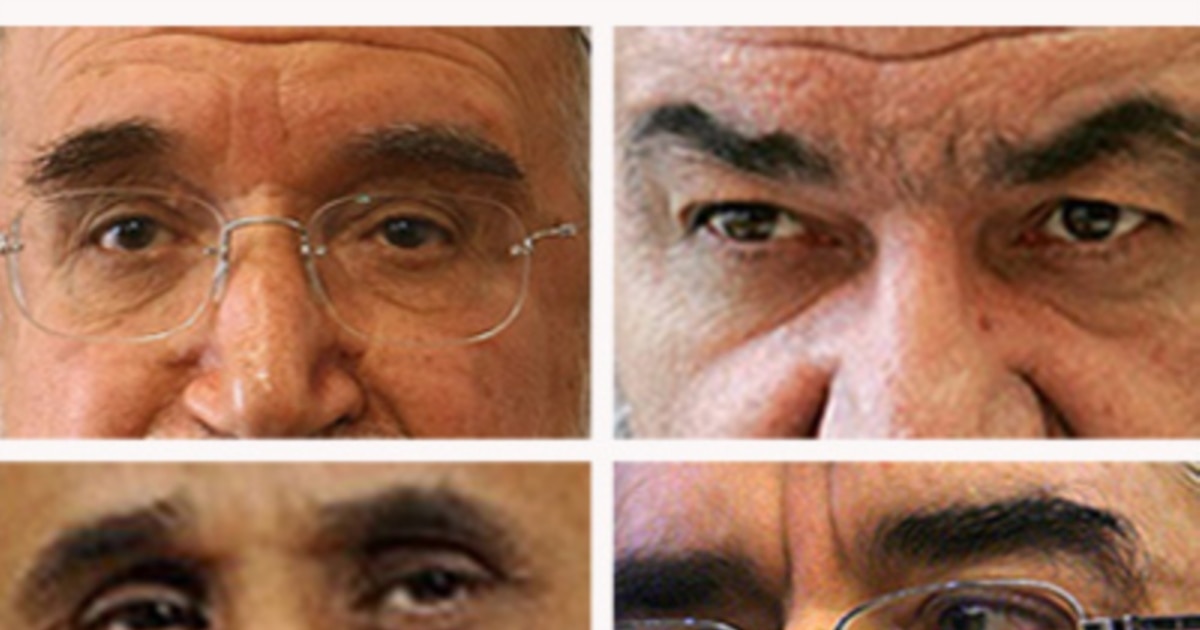
'Serious' contenders Rezai, Ahmadinejad, Karrubi, and Musavi (left to right)They include incumbent President Mahmud Ahmadinejad and former Revolutionary Guards commander Mohsen Rezai, both of whom hail from the conservative camp of the Iranian establishment. The reformist camp is represented in this election by former Prime Minister Mir Hossein Musavi and former parliament speaker Mehdi Karrubi.
Well-known independent and secular candidates -- including former lawmaker Akbar Alami and university professor Ghasem Sholeh Sadi -- stand some chance of making the final list but have so far gone nearly unmentioned in the media.
A conservative female lawmaker, Rafat Bayat, is among some 40 women who have registered their candidacies. But history will be against her: While a Guardians Council spokesman said recently that there are no restrictions preventing women from running for presidency, women have not been allowed on any final lists since the Islamic Revolution.
Tehran-based journalist Abbas Safayifard tells Radio Farda that while independent candidates are at a disadvantage compared to the darlings of state media or political parties, they can still have an impact on the election.
"They can be a voice among the voices and help make the election process more democratic," Safayifard says.
In the last presidential election, in 2005, eight candidates were allowed to run out of the 1,000 who registered.
The Guardians Council has a record of disqualifying independent candidates and those who have been critical of the establishment.
Reformists have accused the powerful conservative body of being motivated by factional interests.Comment
-
Mousavi vs Ahmadinejad
Who will be a better president?
[ame]http://www.youtube.com/watch?v=SCRR0QipCR4[/ame]Comment

 Tweet
Tweet


Comment